Messages - SMS Messenger +
- 4.0
- Rating
- 100.00K
- Installs
- Free
- Price

 Analysis by App-foxy
At first glance, Messages - SMS Messenger + looks like the kind of communication app I could install, try for a few minutes, and forget. Its store description is deliberately brief, while the broader promise from Dovi AI is to make messaging smarter, simpler, reliable, and private. After spending time with it, I think its real test is not whether it feels fresh during the first evening, but whether it earns a permanent place beside the other apps I open every day.
That is a useful way to judge any SMS app. Messaging is already a habit, so a new option has to reduce friction rather than merely offer another icon. This app is free to download, aimed at everyone, and sits in the communication category. It runs on Android 7.0 and later, which makes it accessible to people using older phones as well as newer devices. Dovi AI is the developer, and the current release is version 2.3.10.
What Messages - SMS Messenger + feels like in daily use
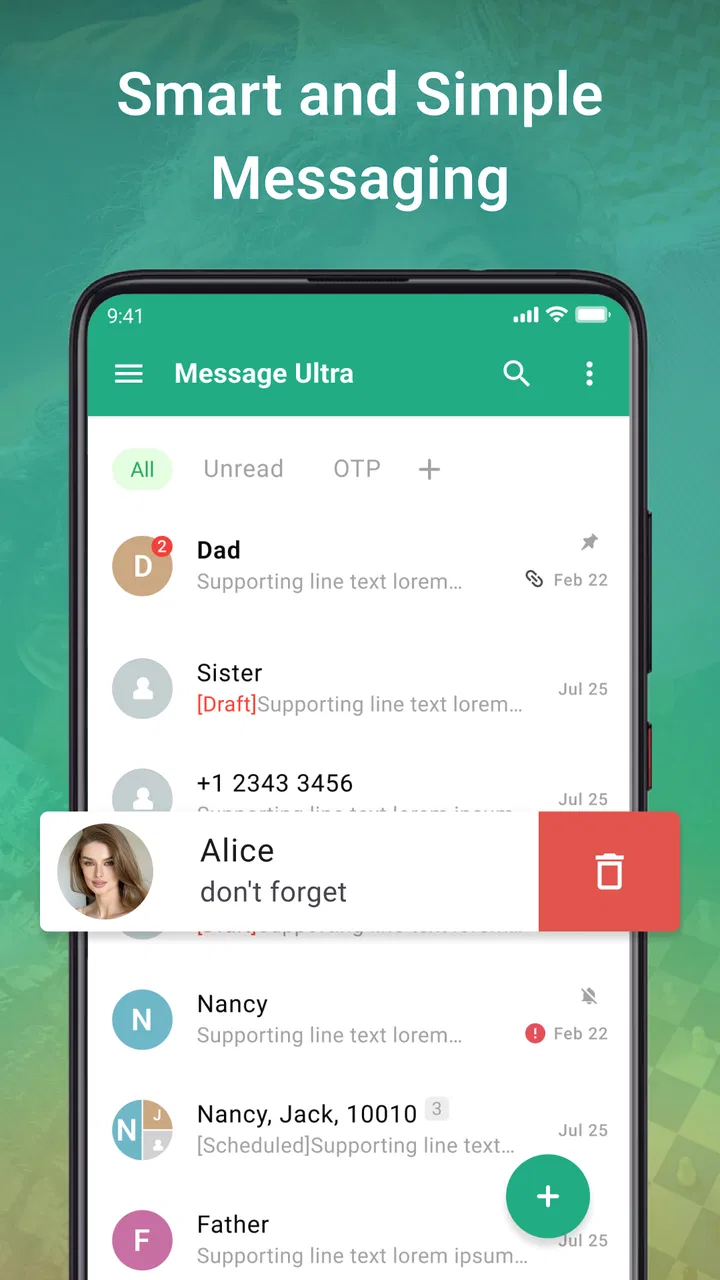
I look at the everyday feel of Messages - SMS Messenger + through the small decisions that shape a texting routine: finding the right conversation, reading comfortably, and replying without extra effort. A useful next step is to notice when and where you use SMS most, since the same interface can feel different at a desk, outdoors, or while handling a quick task. That context matters when considering navigation and readability.
You May Also Like

 Blood Strike: 2.5 Anniversary
Blood Strike’s Loadouts Turn Every Drop Into a Tactical Gamble
A close look at Blood Strike’s custom loadouts: how fast access to signature weapons reshapes its battle royale rhythm, rewards preparation, and narrows the gap between fights.

 Pandora - Music & Podcasts
Pandora’s Music Is Easy to Start, but Harder to Recover
Pandora’s strength is its low-effort path from a seed to a station. Its weak spot is how much confidence it asks you to place in connection, setup, and quiet recovery.

 8 Ball Pool
 Is Built on Rivalries, Rematches, and Routine
A close look at the rivalries, rematches, shared routines, and unanswered safety questions that turn a quick pool match into a persistent mobile community.

 Samsung Music
’s Quiet Strength Is Playing What You Already Own
Its reach comes less from spectacle than from dependable access to a personal library. That simplicity is both the app’s strongest retention engine and its ceiling.

 AccuWeather: Weather Radar
AccuWeather Review: A Quick, Clear Forecast for Everyday Decisions
For everyday plans, the best forecast is the one you can understand quickly. AccuWeather makes rain timing, radar, and local conditions easy to act on, with a few trade-offs.

 Hill Climb Racing
Why Hill Climb Racing Still Turns Crashes Into One More Run
A tiny car, a bumpy hill and one more upgrade: Hill Climb Racing keeps resurfacing because its simple chaos makes every near-miss feel personal.
More From Our News Desk
View All News


The first-week appeal is mostly about replacing friction
My first impression was that the app makes the most sense for someone who wants a dedicated SMS experience without turning messaging into a complicated project. The familiar text-message workflow remains the center of attention: open the conversation, find a contact, write a reply, and move on. That simplicity matters because SMS is often used for practical conversations rather than long sessions. I am usually checking a delivery update, answering a family message, confirming an appointment, or sending a quick note, not looking for a social feed.
The strongest early benefit is therefore not novelty. It is the possibility of making everyday communication feel more orderly. A messenger that stays focused can be easier to live with than an overloaded platform filled with channels, public content, stickers, calls, shopping features, and other distractions. If your current messaging app feels cluttered, a cleaner alternative can make the first week feel noticeably calmer even when the basic task remains the same.
I also like that the app is not presented as a niche tool for one particular group. With an Everyone content rating and support for older Android versions, it can suit a mixed household where not every person uses the same phone generation. That is especially relevant for SMS, because text messaging often connects people who have different devices, carriers, and preferences. An app that works as a straightforward front end is more useful here than one that assumes everyone will join the same private network.
Still, the first-week experience depends heavily on what you expect from it. If you want a full replacement for a modern internet messenger, you may find the SMS focus limiting. Text messaging is not the same as a feature-rich chat service, and no visual refresh can change that underlying difference. I would recommend approaching this as a practical SMS companion, not as a universal replacement for every conversation app on your phone.
A realistic scenario: the family logistics test
Imagine a normal weekday. I receive a message from a relative asking me to pick something up, reply to a delivery driver, and later answer a short question from a colleague. None of these exchanges needs a community, a profile, or a separate account-based network. What I need is a dependable place to see the thread, respond without hunting through menus, and return to the rest of my day.
That is where this app has a clear reason to exist. Its value is tied to repeated small interactions rather than dramatic moments. The most convincing use case is not sending one impressive message; it is handling dozens of ordinary messages without making each one feel like work. I found that distinction important when comparing it with larger alternatives. A social messenger may be better for groups, media-heavy conversations, and people who are already active there, while a focused SMS app can be better for basic reachability.
There is also a useful separation between communication types. I would keep a platform such as WhatsApp, Signal, or another internet-based service for contacts who already use it, especially where richer media or stronger account-based features matter. I would consider this app for the messages that need to remain tied to the phone’s ordinary texting routine. That split can prevent one application from becoming a confusing catch-all.
What changes after the novelty fades
By the second week, the question becomes less about appearance and more about consistency. A messaging app earns trust when I stop thinking about it. I want to know where a conversation is, whether a reply was sent, and whether opening the app takes me directly to the task I had in mind. Those small expectations are easy to overlook during an installation, but they determine whether I keep using an app after the initial curiosity disappears.
Messages - SMS Messenger + benefits from being placed in a category where repetition is natural. I do not need a new reason to open it each day; people’s messages provide that reason. The challenge is that this also raises the standard. A communication app cannot rely on occasional entertainment or a one-time productivity boost. Its recurring value has to come from dependable access to conversations and a workflow that does not create extra decisions.
The app has attracted a 4.3 average from around 1.3 thousand ratings, with more than 200 written reviews and over 100 thousand installs. Those figures suggest that it has moved beyond a purely experimental release, but they do not remove the need for personal testing. Messaging habits are intensely individual. One person may appreciate a focused SMS tool immediately, while another may see little reason to move from the app already connected to their contacts and routines.
Month-to-month value: where the habit either sticks or disappears
After a month, I judge a messaging app by three practical questions. Does it help me respond faster? Does it keep conversations understandable? Does it avoid adding maintenance to a task that should be simple? The first two are the app’s opportunity, while the third is where many replacements lose their appeal.
The month-to-month strength here is its narrow purpose. Because the app is built around messages rather than a broader social ecosystem, it can become a predictable daily tool. That is valuable for people who want communication to stay in the background. I do not need to learn a new content system or build a public presence. I can simply use it when an SMS arrives.
A practical tip is to evaluate it during a normal busy week rather than during a quiet weekend. Send and receive short replies, deal with a longer conversation, search for an older exchange, and move between personal and practical messages. That routine exposes whether the app genuinely reduces effort. A polished first impression is less important than how it behaves when I am distracted, carrying groceries, or trying to answer several people in a row.
Another useful test is to keep track of which conversations still belong in other apps. I would not move every contact automatically. Instead, I would use this app for SMS-dependent contacts and retain internet messengers where their specific advantages matter. That approach avoids the common mistake of expecting one application to replace every communication channel at once.
Maintenance is light, but switching still has a cost
The app is free, which makes trying it relatively easy. It includes in-app purchases ranging from $4.99 to $14.99 per item, so I would review any optional purchase carefully before committing. For a basic messaging tool, my own standard is simple: the free experience should already make sense for everyday use, while paid extras should feel genuinely useful rather than necessary for basic communication.
The main maintenance burden is not learning the interface. It is maintaining a clear role for the app on the phone. If I install it but continue checking another SMS application out of habit, notifications and duplicate routines can become confusing. The cleanest approach is to decide whether it will be my primary SMS workspace or merely a secondary experiment. Half-switching creates more friction than it removes.
I would also give myself time to judge reliability in ordinary conditions. Communication software is not something I want to babysit. If I have to repeatedly wonder which app contains a thread, where a reply went, or whether I need to check another inbox, the convenience disappears. That is why I see the app’s long-term success as a matter of routine clarity rather than a list of flashy additions.
For older Android users, the minimum operating-system requirement is a practical advantage. Someone keeping a reliable older phone does not necessarily want to replace it just to use a current messaging interface. At the same time, people with newer phones may already have a manufacturer messaging app that is deeply integrated into their device. In that situation, switching only makes sense if this app’s experience feels meaningfully easier or more comfortable.
The sources of fatigue you should notice early
The first source of fatigue is the possibility of limited differentiation. SMS apps share the same basic purpose, so the burden is on the replacement to prove that it improves a repeated task. If I cannot identify a clear reason to open this app instead of the default option, the installation may become unnecessary clutter.
The second is the boundary between SMS and richer messaging platforms. Friends who expect group media, internet calling, reactions, or cross-device account access may prefer a different service. This app can still handle its intended communication role, but it should not be judged as though it were competing on every feature of a large internet messenger. Choosing the wrong comparison will either make it look inadequate or make its focused design seem more important than it is.
The third is the emotional fatigue of managing too many communication tools. Every additional inbox asks me to remember where a conversation lives. My advice is to assign this app a specific job: ordinary SMS, practical contacts, or a simpler alternative to an overloaded default. If I cannot describe that job in one sentence, I probably do not need another messenger.
Privacy is another area where I pay attention to the app’s positioning. The store summary emphasizes privacy, which is reassuring as a design priority, but I would still avoid treating that word as a substitute for understanding the app’s actual behavior and settings. For sensitive conversations, I prefer a service specifically designed around secure internet messaging and used by the people involved. For ordinary texts, a focused SMS interface may be enough, but those are different expectations.
Who should use it, and who should skip it?
I think it is a good fit for Android users who want a straightforward SMS application, people using older compatible phones, and anyone frustrated by a default messenger that feels needlessly busy. It is also worth considering for households where communication remains heavily dependent on ordinary text messages rather than one shared chat platform.
I would be more cautious if your conversations are mostly group-based, media-heavy, or spread across several internet services. In that case, a dedicated platform with stronger group tools may be a better primary choice. I would also skip it if your current SMS app already feels fast, clear, and dependable. Changing a familiar tool simply because a new one is available rarely creates lasting value.
People who expect advanced organization should test their most important workflow before settling in. For example, try handling an old conversation, a busy day of short replies, and a message from someone outside your usual contact list. Those situations reveal more than a quick glance at the home screen. If the app makes those tasks feel natural, it has a credible place in your routine; if not, its simplicity may feel more like a lack of depth.
My long-term verdict
Messages - SMS Messenger + is most convincing when I treat it as a dependable everyday SMS tool rather than a revolutionary communication platform. Its appeal comes from focus, accessibility, and the chance to make routine texting feel less cluttered. The developer, Dovi AI, has positioned it for people who value a simpler messaging experience, and the app’s current version shows that it is an actively maintained product rather than a one-day experiment.
That does not mean it is automatically better than the app already on your phone. The lasting decision depends on whether it removes a real annoyance. If your default messenger is confusing, distracting, or uncomfortable to use, I think this app deserves a fair trial. If your needs center on rich group communication or a tightly integrated device ecosystem, another option may serve you better.
My recommendation is to test it with real conversations and give it a defined role before deciding. Do not judge it only by the first launch, and do not keep it installed indefinitely without knowing what problem it solves. The best reason to keep this app is not novelty; it is the quiet convenience of making everyday SMS feel easier to manage.
For me, that gives it a sensible but focused verdict. It can earn lasting space on an Android phone when simplicity is the priority, especially for users who want a practical communication app that does not demand much attention. It is less compelling as a universal messenger, and it should not replace a richer service when that service is where your important conversations already happen. As a free app with optional purchases, it is easy enough to try, but its real value appears only when its focused workflow becomes a habit.
FAQs for Messages - SMS Messenger +
01What features does Messages - SMS Messenger + offer?
Messages - SMS Messenger + provides a comprehensive suite of messaging tools, including SMS, MMS support, and group messaging. It also offers customizable themes, end-to-end encryption for privacy, and an intuitive interface for easy navigation. Users can also enjoy features like quick reply and message scheduling to enhance their communication experience.
02Is Messages - SMS Messenger + secure for private conversations?
Yes, Messages - SMS Messenger + prioritizes user privacy with end-to-end encryption, ensuring that only you and your intended recipient can read your messages. The app does not store any messages on its servers, providing an additional layer of security. Users are encouraged to check app permissions and updates regularly for optimal privacy.
03Can I use Messages - SMS Messenger + on both Android and iOS devices?
Messages - SMS Messenger + is available on both Android and iOS platforms, making it versatile for users who switch between devices. The app ensures a consistent experience across both operating systems, allowing seamless communication with friends and family regardless of the device used.
04Does Messages - SMS Messenger + support multimedia messaging?
Absolutely, Messages - SMS Messenger + supports MMS, enabling users to send images, videos, and audio clips along with their text messages. The app allows for easy attachment and sharing of multimedia content, making it convenient for users to express themselves beyond simple text communication.
05Is there a cost associated with using Messages - SMS Messenger +?
Messages - SMS Messenger + is free to download and use, although it may offer in-app purchases for premium features or additional customization options. Standard carrier charges for sending SMS and MMS may apply, depending on your mobile plan. Users are advised to check their data plans to avoid unexpected charges.
Pros
- User-friendly interface for easy navigation.
- Supports multimedia messages with ease.
- Customizable themes and chat backgrounds.
- Fast message delivery and notifications.
- Secure with end-to-end encryption.
Cons
- Lacks advanced spam filtering options.
- Limited integration with other apps.
- No support for RCS messaging.
- Occasional delays in message syncing.
- Ads can be intrusive at times.

Messages - SMS Messenger +
Gallery